

Lucy F. Covington Government Center
The Lucy F. Covington Government Center brings together tribal administration and member services in a single civic setting designed to serve the Confederated Tribes of the Colville Reservation.
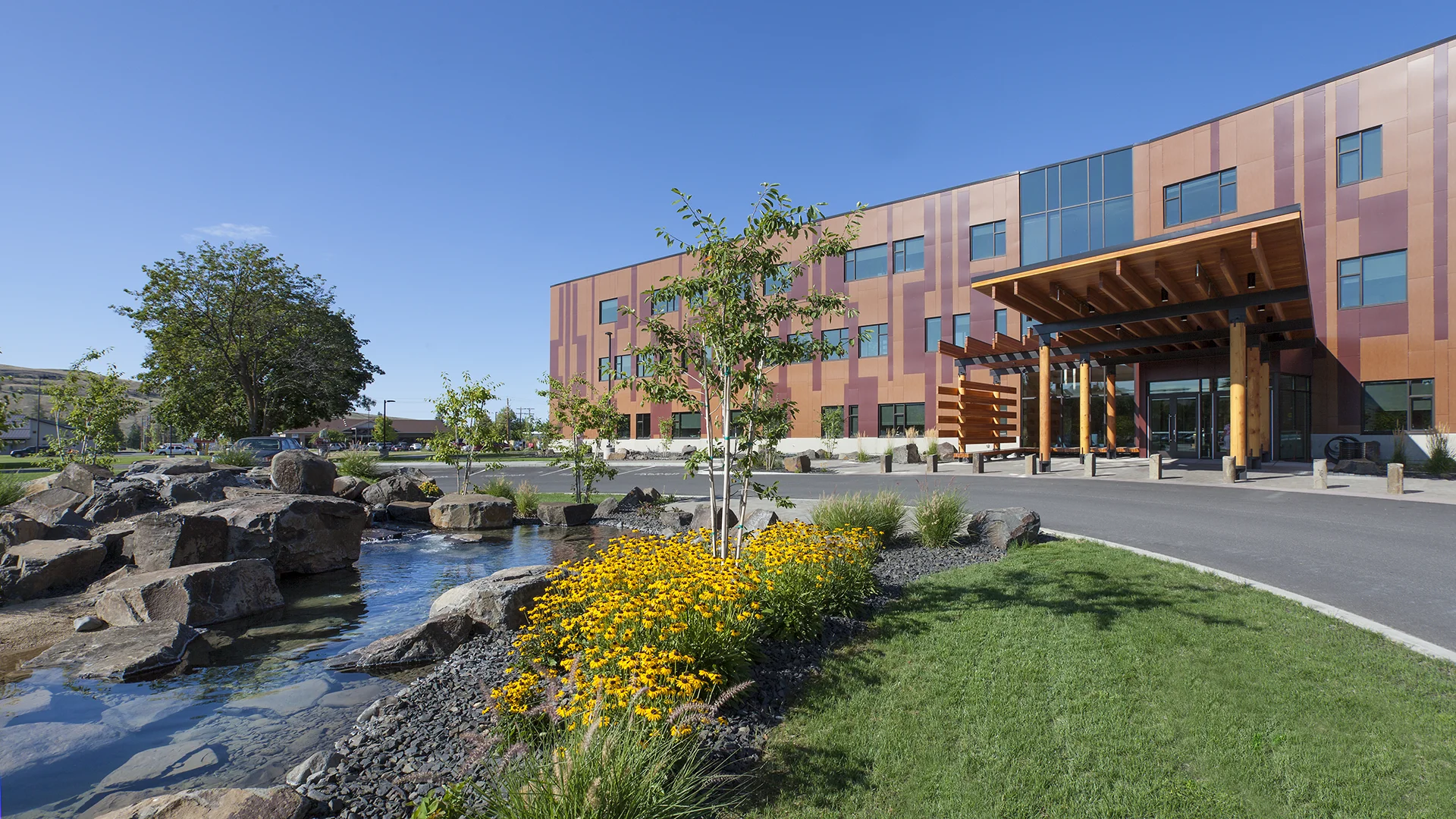
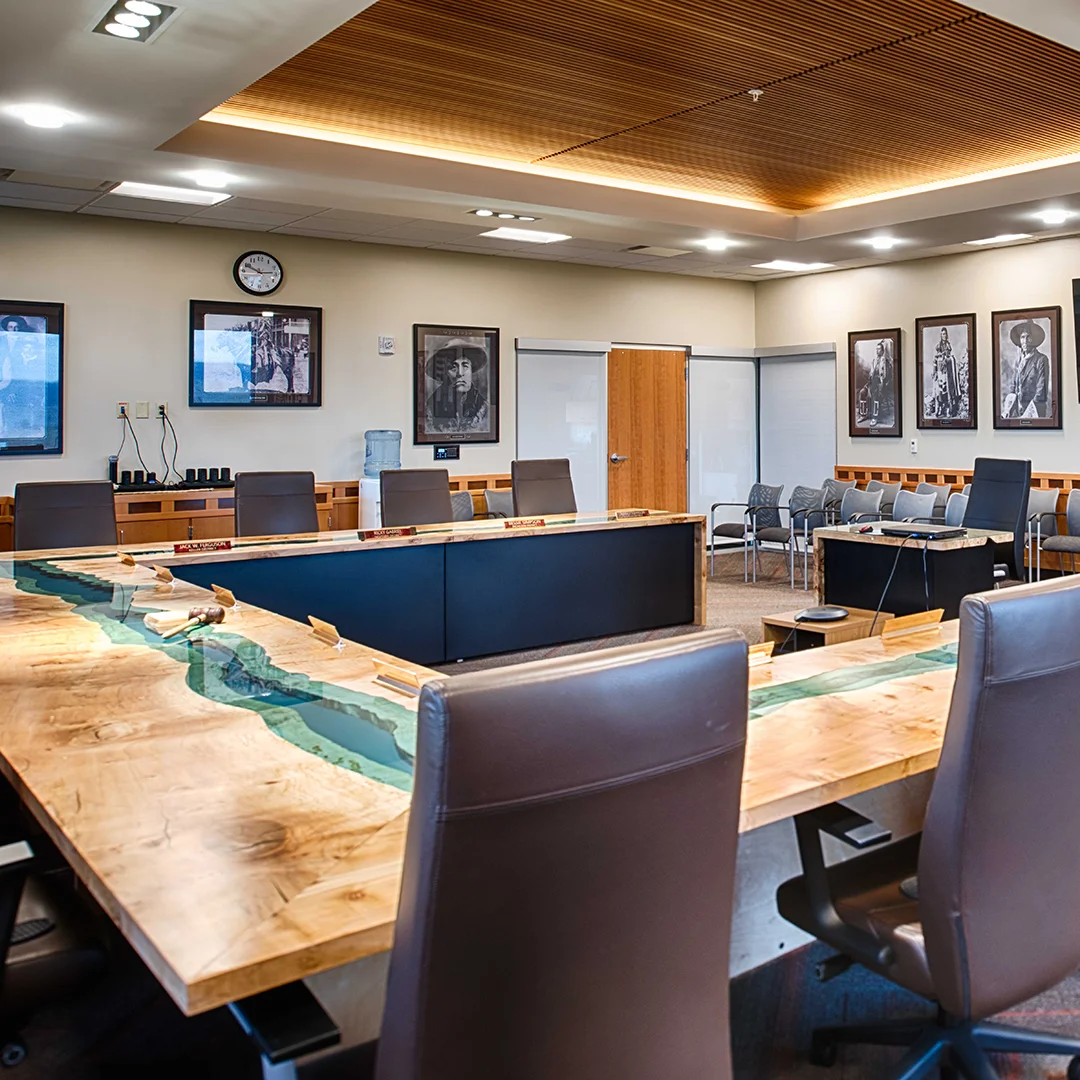
Replacing a former headquarters lost to fire, the new facility creates a shared home for functions that had previously been dispersed across multiple buildings.
One of the biggest challenges was to meet with staff members representing twelve tribes and 50 different departments to develop a program for the building.
The facility includes offices and support spaces for the Colville Business Council, public safety, land and property management, member services, finance, and administration departments. It also includes education services for the Colville Tribal College and a fitness/wellness center for tribal members.
The civic center respectfully represents the tradition, history, and culture of the tribe while also reflecting their progressive nature and a 21st century workplace environment.
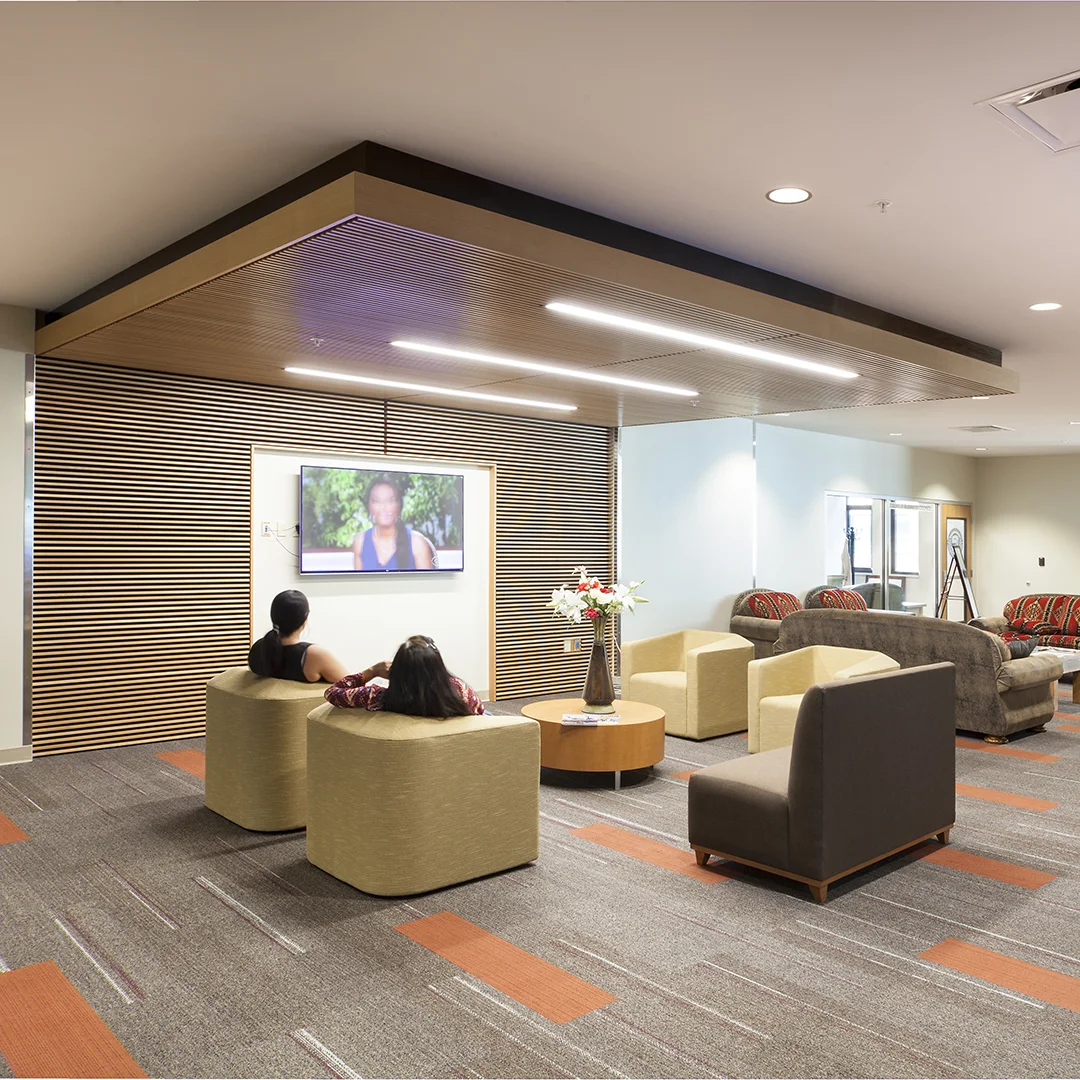
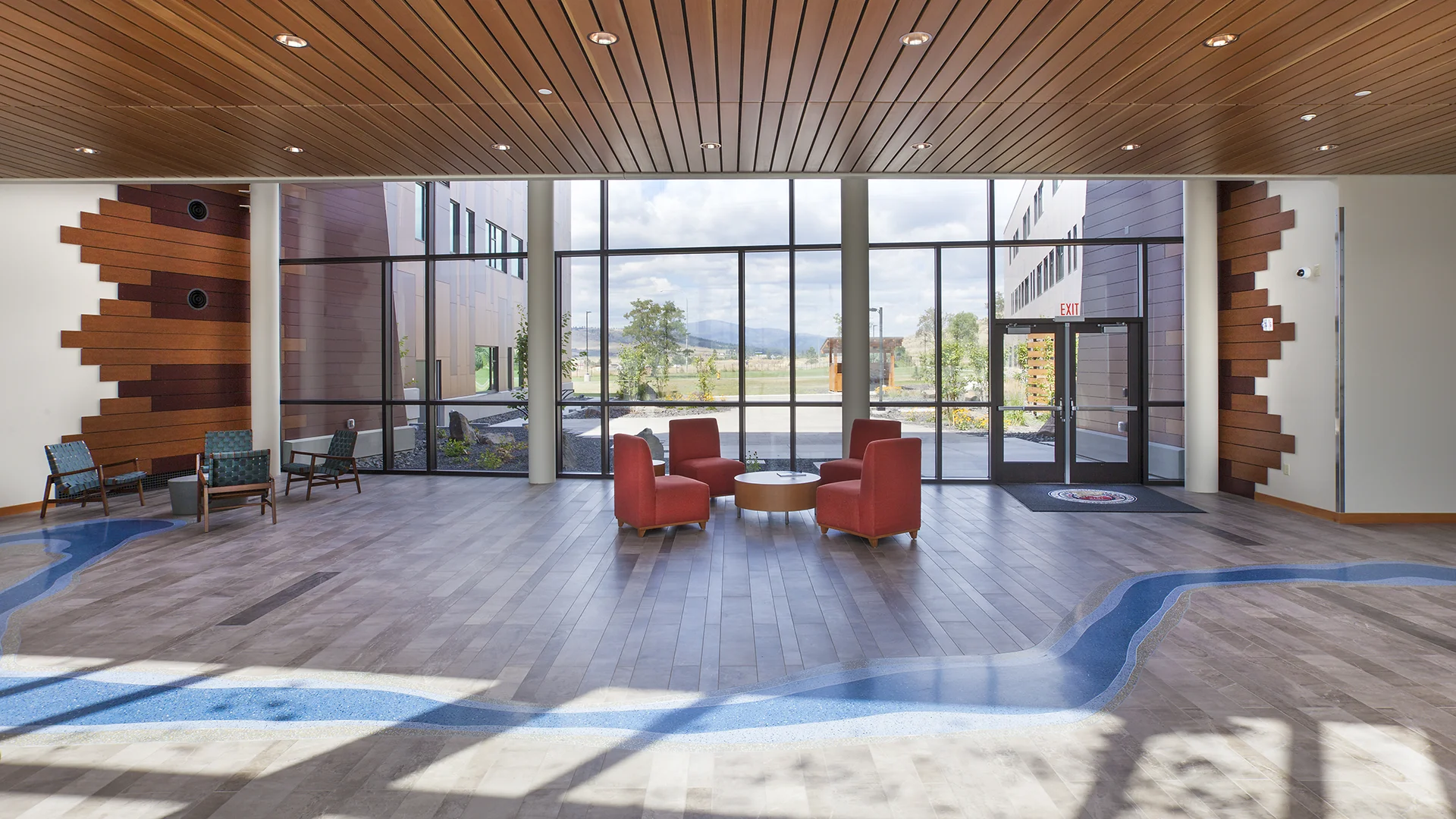
Cultural values and landscape were central to the design, influencing the building’s form, material expression, interior display opportunities, and relationship to the site.
Owner
Confederated Tribes of the Colville Reservation (CTCR)
Location
Nespelem, Washington
Size
166,706 sf New Construction
Delivery Method
GC/CM
Services
Architecture, Landscape Architecture, Interior Design
Team Partners +
Team Partners -
Contractor: Lydig Construction
Design Consultant: Opsis
Structural: DCI Engineers
Mechanical: Coffman Engineers
Electrical: Coffman Engineers
Civil: J-U-B Engineering
Geotech: Geo Engineers
Fire Protection: FP Engineering
Project Facts
- The building is sited to capture broad and directional views out toward the dramatic landscape which continues to play a significant role in the life of the community.
- The skin of the building is made up of a wall panel system that in its layout and patterning, is taken from research into the historical weaving, beadwork, and basketry.